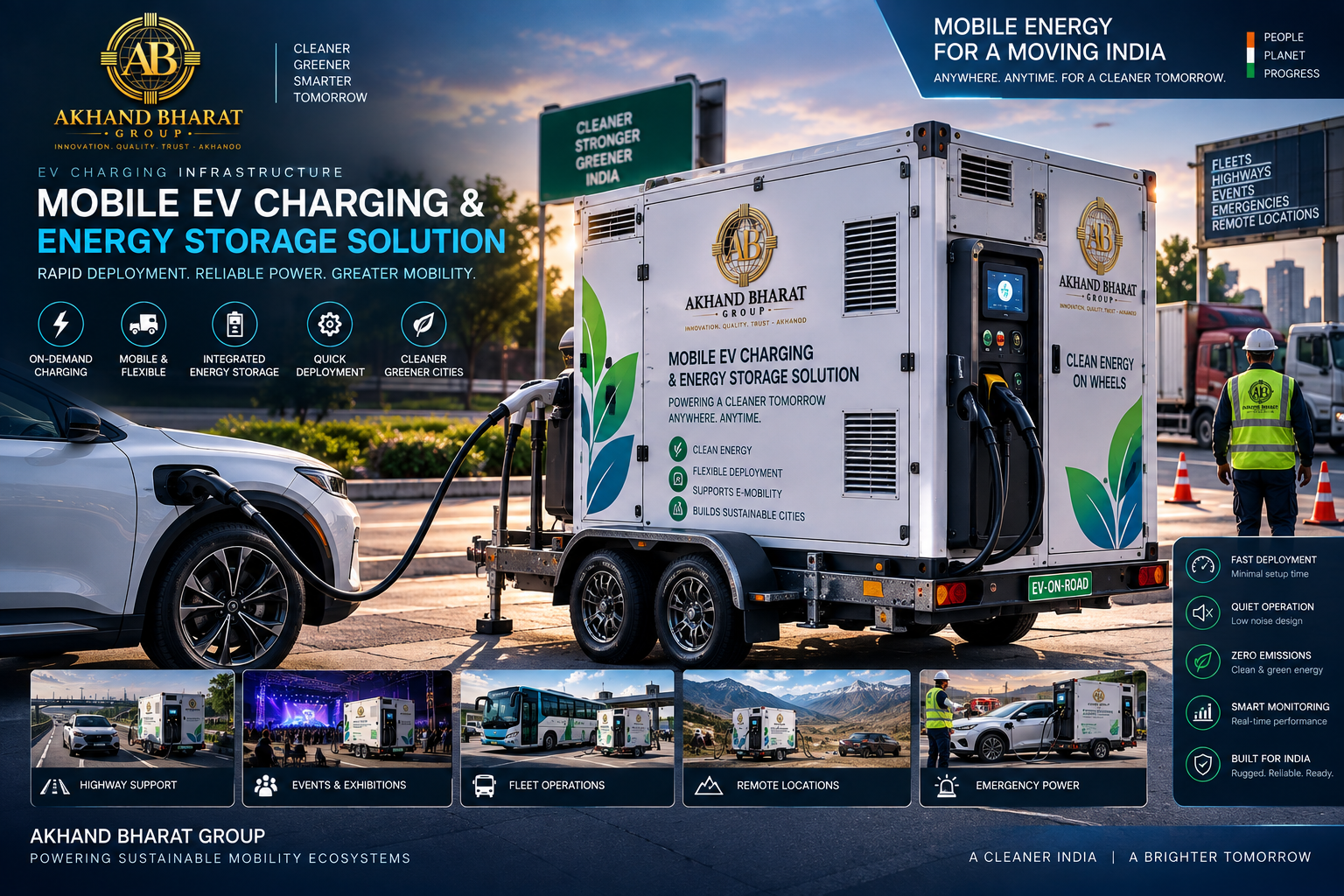
Mobile EV Charging & Energy Storage Solution – 20 kW / 35 kWh
SKU: ABG-EVC-MOBILE-2035
All-in-one mobile EV charging and energy storage solution combining 20 kW DC charging power with 35 kWh LiFePO4 battery storage.
Overview
The ABG Mobile EV Charging & Energy Storage Solution combines battery energy storage, DC fast charging and intelligent energy management in a mobile platform. Designed to bring charging directly to vehicles, the system removes dependence on fixed charging infrastructure and enables rapid deployment for emergency charging, roadside assistance, events and temporary EV charging operations. Key Features 35 kWh energy storage 20 kW DC charging power LiFePO4 battery technology ≥6,000 cell cycles 150V–750V DC output Integrated vehicle-mounted chassis Smart EMS 4G / 5G remote monitoring Forced air cooling IP54 protection Fire detection and suppression Grid-independent deployment
Technical Specifications
| Storage Capacity | 35 kWh |
| DC Charging Power | 20 kW |
| Battery Chemistry | LiFePO4 |
| Cycle Life | ≥6,000 cycles |
| DC Output Voltage | 150V–750V |
| Rated System Voltage | 350V |
| Charge / Discharge Rate | 0.5C |
| Depth of Discharge | ≤90%–95% |
| System Efficiency | ≥90% |
| Mobility | Vehicle-Mounted Chassis |
| Protection | IP54 |
| Cooling | Forced Air Cooling |
| Operating Temperature | -15°C to +55°C |
| Remote Monitoring | 4G / 5G |
| Fire Suppression | FK-5-1-12 System |
| Application | Highway Emergency Charging | Roadside Assistance | EV Rescue Services | Events & Temporary Charging | Construction Sites | Fleet Maintenance | Remote Locations | Grid-Constrained Areas |
Technical buying guidance
Related buyer guides & requirements
DC Fast Charger Selection Guide
Match charger power, connector, communications and operating requirements to the intended site.
Read guideEV Charger Site Power Requirements
Validate sanctioned load, transformer capacity and simultaneous charging demand before deployment.
Read guideFleet Charging Infrastructure
Translate vehicle duty cycles, depot schedules and electrical constraints into the charging architecture.
Read guideTell Us About Your Charging / Energy Requirement
Share what you already know. You do not need to have every specification finalized before starting a technical discussion.